 City Sewer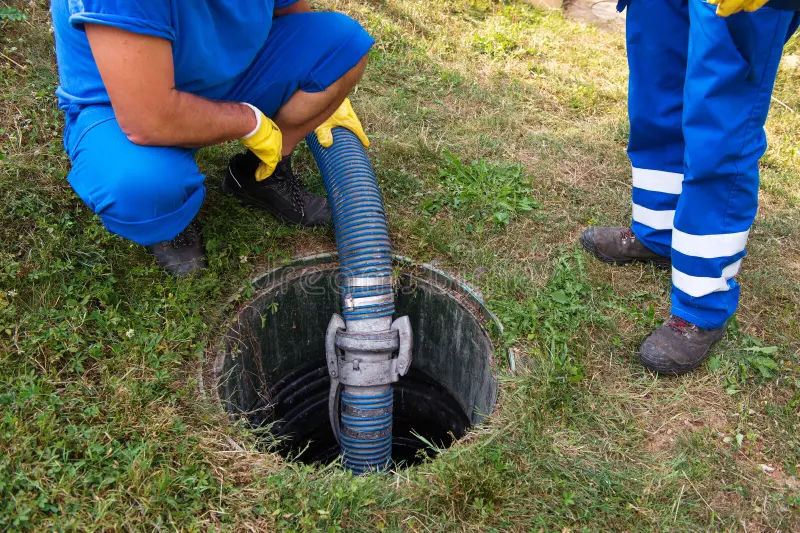
What is septic tank pumping?
Septic tank pumping is the removal of the sludge and scum layers that collect inside your tank as wastewater separates. A technician locates the tank, opens the access lid, and vacuums out the contents so the tank can function properly and protect your drain field from premature failure.
Inside every septic tank, solids settle to the bottom as sludge while grease and lighter material float to the top as scum. Liquid flows out to the drain field in between.
Over time those layers grow until they crowd the tank and threaten to push solids into the drain field. Pumping resets the tank so the separation process continues working as designed.
How often should you pump a septic tank?
Most households should pump every 3 to 5 years, but the right interval depends on tank size and how many people live in the home. Smaller tanks and larger households fill faster and need more frequent service. Use the table below as a general guideline for planning.
Heavy water use, garbage disposals, and extra guests all shorten the interval. When in doubt, a quick inspection tells you exactly where your sludge levels stand.
Regular pumping is far cheaper than repairing or replacing a failed drain field, so staying on schedule protects your whole system.
| Household size | Tank size | Approx. pumping interval |
|---|---|---|
| 1-2 people | 1,000 gal | Every 4-5 years |
| 3-4 people | 1,000 gal | Every 3-4 years |
| 3-4 people | 1,250-1,500 gal | Every 4-5 years |
| 5-6 people | 1,000 gal | Every 2-3 years |
| 5-6 people | 1,250-1,500 gal | Every 3-4 years |
What are the signs your tank is overdue?
Watch for slow drains throughout the house, sewage odors indoors or in the yard, gurgling pipes, pooling water or soggy ground over the drain field, and unusually lush, green grass above the tank. Any of these means it is time to call for service before a backup happens.
- Slow drains or multiple fixtures draining sluggishly at once
- Foul sewage odors near the tank, drain field, or inside the home
- Gurgling sounds in toilets and drains
- Standing water or soggy, spongy soil over the drain field
- Bright green, fast-growing grass above the tank or field
- Sewage backing up into the lowest drains or toilets
What does the pumping process look like?
A typical pump-out takes about 20 to 60 minutes. Our technician locates and uncovers the tank access, inspects the sludge and scum levels, vacuums out all contents with a pump truck, checks the tank and baffles for obvious issues, and then hauls the waste away for responsible disposal.
We come prepared with the equipment to reach and service residential tanks across the Great Lakes Bay Region.
After pumping, we let you know what we observed and whether anything needs attention, so there are never any surprises.
- Locate and open the tank access lid
- Measure sludge and scum levels
- Vacuum out all liquid, sludge, and scum
- Visually inspect tank walls and baffles
- Transport waste for environmentally responsible disposal
What is included with City Sewer pumping?
Every pumping service includes locating and opening the tank, a complete pump-out of all contents, a basic visual check of the tank and baffles, and responsible disposal of the waste. You get clear, honest, upfront pricing with no hidden fees, from a fully licensed and insured Michigan team.
- Complete removal of sludge, scum, and liquid
- Basic visual inspection of tank and baffles
- Environmentally responsible waste disposal
- Clear, upfront pricing with no hidden fees
- Licensed, insured service with 24/7 emergency availability
Frequently Asked Questions
How long does septic pumping take?
Can I pump my septic tank myself?
What happens if I never pump my tank?
Does a garbage disposal affect how often I pump?
How do I know what size my septic tank is?
Do you offer emergency septic pumping?
What areas do you serve?
Trusted Septic Resources
Homeowner guidance from authoritative sources on septic system care, maintenance, and Michigan regulations: